
|
February 6th, 1918 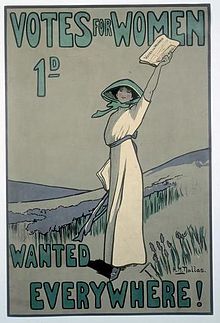 A hundred years before women got the vote, Jeremy Bentham wrote a book A Plan for Parliamentary Reform. This resulted in the Vestries Act 1818 that allowed some single women to vote in parish vestry elections. But in 1832 women were banned from voting with the passing of the Great Reform Act which only talked about male persons. There was some support for women and suffrage and in the 1850’s women’s rights became more prominent. In 1857 women won the right to sue an ex-husband after divorce. In 1865 John Stuart Mills ran for office with support for female suffrage. At this time women started to meet in groups debating about women being involved in public affairs. In 1867 suffrage groups were started in Manchester, in London and in Edinburgh and Dublin. And then in 1868 local groups joined and formed groups which became the National Society for Women’s Suffrage. In 1870 women’s suffrage movements in Wales and other parts of the UK gained momentum. This became a national movement in 1872. In 1903 the Women’s Social and Political Union was formed by Emmeline Pankhurst and her daughters Christabel and Sylvia. The movement became quite militant and some were jailed. Some say that this militancy damaged the cause. Meanwhile the NUWSS (National Union of Women’s Suffrage Societies) remained focused on gaining the vote. By 1906, general opinion about women being allowed to vote was changing.
During the first World War, many women started working as the men were all away. This further moved the cause for women’s rights. There were no suffragette campaigns at this time although there was some quiet lobbying. During 1916-17 the house of Commons speaker William Loather chaired a conference on elections which recommended limited women’s suffrage. Prior to 1918, only 58% of the adult male population was eligible to vote as the rules stated that men had to be in the country for 12 months prior to an election. This was clearly unpopular for men who had been away at war. Politicians were persuaded to extend the vote to all men and women. The Representation of the People Act was passed which allowed women to vote who were over the age of 30 and were property owners, married to property owners, paid rent or who were university graduates. As well, men over the age of 21 years and those in the armed forces who were age 19 and over could vote. On Nov 21, 1918 the Qualification of Women Act was passed that allowed women to be elected to Parliament. February 6th, 1918 is celebrated as the day women first got the vote but it wasn’t until 1928 that women over the age of 21 could vote and had the same voting rights as men.
0 Comments
Your comment will be posted after it is approved.
Leave a Reply. |
Categories |
 RSS Feed
Proudly powered by Weebly