
 Mother's Day takes place in the UK and Ireland on the fourth Sunday in Lent which usually falls in March. In other parts of the world such as in the United States and Canada, it falls in May.
The history of Mother's Day in the UK is somewhat different. It was initially Mothering Sunday which related to a person's "Mother Church." The tradition of returning home to your Mother Church (the church in which you were baptized) started in the 16th Century and was strictly a religious tradition and had nothing to do with mothers. The return home to the Mother Church was known as 'going a-mothering.' This was an event to look forward to as many workers such as domestic servants had few holidays. But on this day, they were given the day off to return to their mother church where they would visit family as well. This would have often been one of the only times of the year for many to have had the opportunity to do so. Traditionally, a Sinnel Cake was baked on Mothering Sunday. This cake is a rich fruit cake with layers of marzipan. To keep to the religious purpose of the event, the cake usually has 11 balls of marzipan on top that represent the disciples of Jesus minus Judas. At the earliest time of this tradition, around the year 1600, sweet buns topped with 'hundreds and thousands' called Sunday buns were served in much of England whereas in northern England and Scotland a pancake made from steeped peas fried in butter were served. At the beginning of the 20th Century, Mothering Sunday was no longer observed. A daughter of a vicar, Constance Penswick-Smith, thought this to be a shame and worked hard at restoring the tradition. She wrote a book on the subject and founded a society with the aim of bringing it back. She was helped in this regard by an American Anna Jarvis who wanted to create a formal Mother's Day in the USA. UK merchants saw the benefit of this and promoted the idea. By the 1950's 'Mother's Day' was celebrated across the UK but at the same time as Mothering Sunday had been - the fourth Sunday of Lent. Today families still get together to celebrate mothers and grandmothers. Cards, flowers and chocolates are commonly given to show appreciation and a hearty Sunday roast lunch is widely eaten by many.
0 Comments
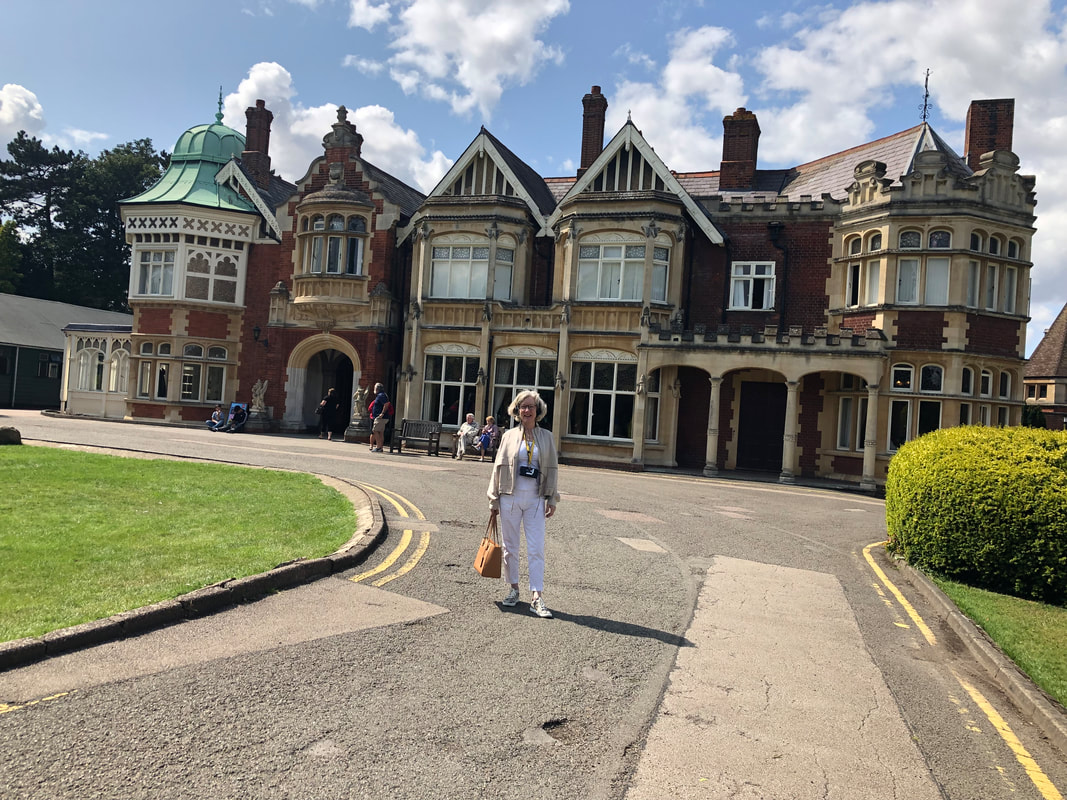 In 1938 the British Government quietly bought a Victorian mansion built in 1883 complete with 58 acres of grounds. The best mathematicians came here and most notably Alan Turing. Initially there were only 200 workers but these numbers steadily increased following All Turing's plea directly to Winston Churchill in 1941. Churchill immediately asked that they get all the resources they needed. As well as better equipment, many outbuildings called Huts were added to the grounds to accommodate increasing staff and operations.
The workers were primarily women and included those with excellent chess and crossword puzzle skills. The staff worked around the clock. For the most part they did not know what the purpose of their work was. However they were all sworn to secrecy to such an extent that a couple, who both received an invitation to a reunion at Bletchley Park about 50 years later, had not told each other that they had worked there until after receiving the invitation. All information was classified until the 1970's. It was only after Frederick William Winterbotham received permission to publish his memoir 'The Ultra Secret' that the public finally knew what went on there. During the war, when employees increased to 9000 in 1944, the local residents must have wondered what their work was. They knew it was for the war effort. There wasn't room at Bletchley Park to house everyone and many lived in neighbouring properties. The employees did go to church and to dances in the area on days off. One woman's remembrances was of changing from her work clothes into 'glad rags' in a barn between Bletchley Park and the hall where the dance was. Work at Bletchley Park was monotonous for many and some became exhausted and/or depressed. One former employee spoke of becoming ill and being put to bed where she slept for days. She had wanted to quit but that gave her a boost. It was cold in the winter and too hot in the summer in the huts. Nearly everyone smoked during the war and the smoke hung in the air, particularly in winter, making some employees ill. The administration knew that the work was having a negative affect on some employees' mental health and met to make a plan of how to improve things. A social committee of sorts was formed and the employees became involved making their own fun including putting on plays. The brochures for the theatrical events can be seen at Bletchley Park today. What was going on was decrypting of German codes so thus their intelligence. The codebreaking operations led to the building of code breaking machines called Bombes. An early electronic computer, Colussus, was constructed in 1944. Alan Turing was in Hut 8 when he and his associates solved Enigma. British intelligence has said that the work at Bletchley Park shortened the war by 2-4 years. The decoders worked on patterns to decipher the German intelligence. Initially this was done with pencil on paper. EVERY DAY there was a new code. The staff were helped in this by knowing, for example, that each piece of intelligence ended with Heil Hitler. At one point the decoding method changed and Bletchley Park staff were unable to figure out the decoding. Luckily, within a short time period, a German in their armed forces happened to be caught who had information on his person which showed the staff what the new pattern was. The staff also decoded Japanese. The Japanese were allies with the Germans. Some staff knew some Japanese and others studied it. A letter was intercepted that had been written by a prominent Japanese man who had met with Hitler. This letter outlined the plans of the Third Reich and this letter was decoded In full. This was prior to the planned D-Day landings and this letter confirmed what the allies thought - that Hitler believed that they would land much further north than where they were planning to. The D- Day landings set the course for the downfall of Hitler and the Third Reich and the end of World War Two. The Post Office took over Bletchley Park after the war and it was used as a management school. By 1990 the huts were being considered for demolition but a Bletchley Park Trust was formed in 1991. Bletchley Park is open to the public now. There has been a renaissance in recent years - possibly since the movie about Alan Turing featuring Bletchley Park (The Imitation Game) that came out in 2014 featuring Benjamin Cumberbatch and Keira Knightly. The huts have been restored and you can see how they decoded and you can have a go yourself. Bletchley House features different exhibits which follow the history of Bletchley Park, the operations and the people who worked there. Bletchley Park has family events over school holidays and other special days such as Valentine's Day and Mother's Day. In 2020, the 1st May Bank holiday has been moved back one week to coincide with the 75th anniversary of VE Day. Bletchley Park will be celebrating with a special themed weekend. And there are afternoon teas at Bletchley Park some Friday-Mondays and there is always an open cafe. Getting there by public transport is easy. The train station is just across the street. If you have hot been to Bletchley Park, consider going. It is a very interesting day out for the whole family. Go to their website for information about all of their programs and entrance fees. One thing that I don't see on their website is that there is a reduced entrance fee when coming on the train. Consider not buying a ticket on line if going on the train as you will save on the entrance fee at the door. The website is bletchleypark.org.uk. There you will find interesting podcasts as well. You can also sign up for a monthly newsletter 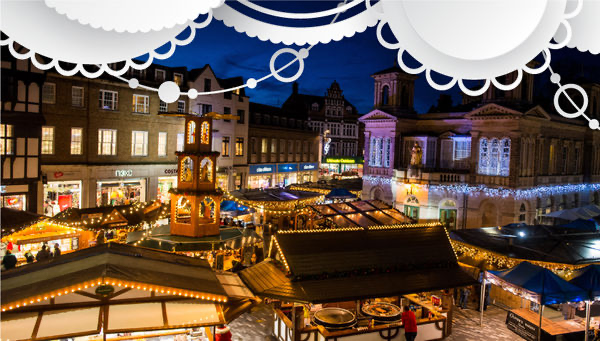 German like Christmas markets have become more and more popular and more and more plentiful in the UK. In London alone, there are new ones every year. The market at Hyde Park is still the number one site to visit. Unlike most markets this one includes a skating rink. There is also an observation wheel and circus shows as well as a huge Christmas market selling a variety of things including wooden toys and hot chocolate. Usually there is a carousel and of course Santa's grotto.
Kingston in south west London has had a Christmas market for a number of years. Buy a bratwurst and a mulled wine and then you can wander around the town. Being from North America this was great as where I come from, you have to stay in a fenced in area when you consume alcohol. Christmas markets have sprung up on London's Southbank, beside London Bridge in the City and at Leicester Square. At Leicester Square, as well as the traditional stalls selling hand made goods and Santa's grotto, there are a lot of activities including shows for adults and children. Children can make a radio show, attend a dance workshop or direct their first play! There is stage box and Shlomo's Beatbox Adventure of Kids as well. Throughout England, there have been terrific Christmas markets for years in Bath and Birmingham. There you can purchase typical German Christmas ornaments such as hand painted carousel that turn around by the candles in them. Other markets that are well worth going to are in Manchester, Winchester, Portsmouth, Lincoln, York, Rochester, Norwich, Skipton, Padstow, Leeds and Stratford-upon-Avon. Rochester also has a Dickensian Christmas Festival during December where people dress up in Victorian dress and do carolling. Some of the markets are open for just a few days (as the one in Portsmouth) and some from a date in November until just before Christmas or into January. Scotland, Wales and Northern Ireland all take part in this newish Christmas tradition. Edinburgh, Aberdeen, Glasgow, Inverness all have markets but the one in Inverness is just for a few days whereas Aberdeen's runs from November 21st until December 31st. Cardiff's Christmas markets runs until December 23rd but Llandudno's finished already (November 14-17). Swansea's also runs until January 5th. Belfast enjoys in the festivities until December 22nd. They have French crepes, Dutch pancakes, Belgian chocolates and exotic burgers! At Portstewart, there are handicrafts to view and buy. The market here runs until December 19th. Dromore's Christmas Wonderland ends on December 12th. There are various other markets that are just for a day or two throughout the season. The Christmas markets are free to go into and go along way in making dreary November and December a cheerful season! Enjoy the food, go on some rides, and buy a few handicrafts. It is such a fun activity for one and all. Happy Christmas! 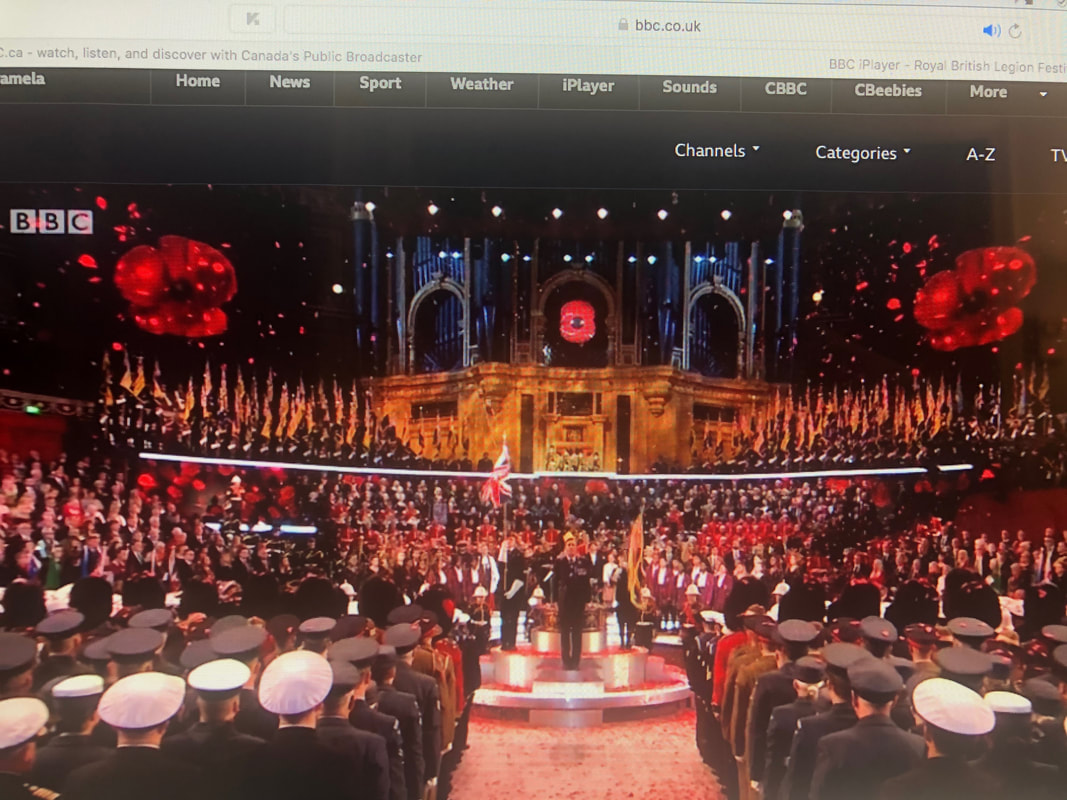 Following World War 1, a suggestion was made that there be a time of silence to mark the end of the Great War. King George V heard of this suggestion and thought it to be a very good idea. He implemented 2 minutes of silence on at the 11th hour of the 11th day of the 11th month in 1919. This day was referred to as Armistice Day. The period of silence is still marked in the UK where this day is not a holiday as it is in some countries of the world such as Canada.
A cenotaph had been built in 1919 at Whitehall in London and following WW1 it was decided that the war victims should be remembered on a Sunday close to November 11th. A service at this cenotaph occurred every year and was broadcast from 1928 by BBC except during WW 2 and still is. In 1939 due to the outbreak of WW2 the day was renamed the Day of Dedication. In 1956 it was established that Remembrance Sunday should be on the second Sunday of November and this tradition continues to this day. Today Armistice Day and Remembrance Sunday commemorate British service men and women as well as their allies who have died in all military conflicts including the Boar War, the Korean War, in the Falklands and the Gulf War, in Northern Ireland, in more recent conflicts in Iraq and in Afghanistan as well as during the conflict in what was Yugoslavia. At Whitehall the Royal Family attends and lays wreaths as do politicians, religious leaders, military representatives and other dignitaries. There is March Past of veterans and Armed Forces units after 11am following a service of prayer and hymns and laying of wreaths. Typically up to 10,000 people take part in the March Past at the London Cenotaph. Typically all communities in the UK have their own services on Remembrance Sunday and local Armed Forces, cadets, scouts, Guides and members of the Boys and Girls Brigades take part and churches are involved. The British Legion began a poppy appeal in 1921 to raise funds for veterans as it still does today. Citizens in the UK and especially those in prominent positions always wear a poppy for several weeks before Armistice Day. The British Legion became the Royal British Legion in 1971. The Royal British Legion sponsors the annual Service of Remembrance that is on the Saturday evening prior to Remembrance Sunday. This is a very moving service that takes place at the Royal Albert Hall to which the Royal Family members, veterans and members of the Armed Forces attend as well a the beloved Chelsea Pensioners. There are always family members who have lost loved ones there to represent all families that have shared their loss. Veterans share their stories, there are songs and sometimes dance, poetry, readings, hymns and prayers. It ends with silence while poppies fall from the ceiling. At Westminster Abbey their is an annual Field of Remembrance where citizens can add a small cross. Across the UK, there are always other dedications and displays. In recent years there have been mass poppy displays at the Tower of London and at Chelsea Hospital. Businesses sometimes mark their honour of those who have served in such ways as with a mannequin with a dress of poppies. One company dropped poppies from their atrium during the period of silence one year recently. From 2015-2018 the poppy sculptures Wave and Weeping Window toured 19 locations around the UK. There have been knitted poppy campaigns and these have been drooped over castles such as Hertford Castle and have taken prominent places in towns. Poppies have been projected on buildings and cathedrals, and Hull Minster had an installation of a sculpture in poppies. And of course poppies are what are the prominent feature of all the wreaths which are lain on Remembrance Sunday and around Armistice Day. Wreaths have been lain on the football pitch before a game at this time of year. In 1920 it was decided to have a grave to the Unknown Soldier at Westminster Abbey to commemorate all those who had died but of whom there had been no identification. A body was brought to London from Belgium for this purpose. There is always a candle lit here and poppies are around the headstone which is a prominent feature as one enters the Abbey. Other monuments to the dead have been built around the UK such as the National Memorial Arboretum in Staffordshire and the Air Forces monument for those men and women of the British empire who lost their lives in air operations at Runnymede, Englefield Green, Surrey. There are many monuments, statues and cenotaphs all over. BBC always airs documentaries about the World Wars in particular and personal stories of veterans and victims or war for weeks prior to November 11th. It is fair to say that even though November 11th is not a holiday in the UK , it is a very important day for its citizens. 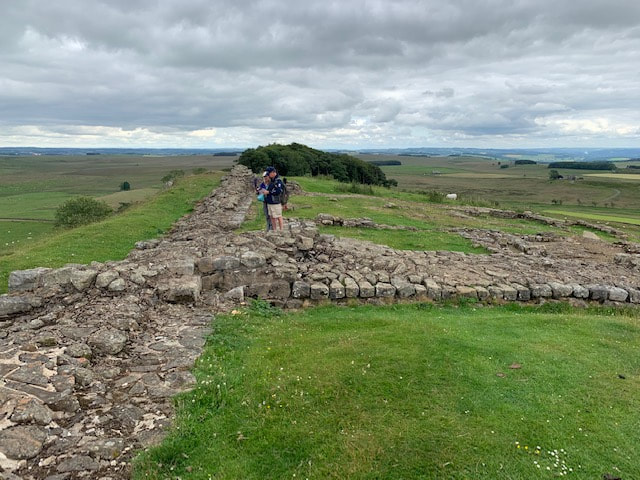 Hadrian’s Wall was built by order of Emperor Hadrian starting in AD 122. The common wisdom is that it was built to keep out the Barbarians of the North from the superior civilization in the south. The Romans were in Britain for 4 centuries but were first invaded by Caesar in 55 BC. Emperor Claudius returned in AD 43 and Britain was a successful conquest for him. He left it to others to conquer the whole of the island and it was under governor Agricola that real advances were made through what is now Scotland to the Tay. Routes were built up the west and east coasts. Rome wasn’t really interested in conquering the Highlands and wanted to establish a border around its most valuable lands. A natural border was the land between the Forth and the Clyde but one of the 4 legions of Rome’ s armies was called back to Europe and the army was spread too thinly to control as much land as that. So a new border was established between the Tyne and the Solway Firth.
When Hadrian became Emperor in AD 117 there were already forts at Carlisle and Corbridge (now a village close to Hexham) and they were linked by a road. Other forts had been built at Vindolanda (near Bardon Mill, Hexham) and Nether Denton (about 12 miles north east of Carlisle) along with other smaller forts. It was Hadrian who decided to make a permanent frontier and that it would go from Bowness to the bridge built at Pon Aelius at the river Tyne. The wall was to be of stone to a width of 3 metres from the Pon Aelius for 45 Roman miles (43 miles today) and then it was to be of turf, with sloping sides, 6 metres wide at the base. To the north would be a ditch that was 10 feet deep. At regular intervals were Milecastles and in between these a pair of turrets The Milecastles were really fortified gateways so there was a way through the wall. This provided a way to the enemy if needed and also for trade. Early on the foundations were laid and where the Milecastles would be wa planned out. Soon afterwards it was decided to reduce the width of the wall. A fort was built at Segedunum at the mouth of the Tyne and 11 more forts were built at 7 mile intervals to Bowness-on-Solway. And before the wall was completed a further ditch known as the Vallum was dug to 6 metres wide and 3 metres deep. The excavated earth was piled in mounds on either side. In AD138 Hadrian died. New Emperor Antoninus Pius, decided to advance further into Scotland to the Forth and Clyde. A new wall was built - the Antonine Wall. In the latter part of the second century, there was an invasion from the north and Roman gains were reversed. There a a hasty rebuilding of Hadrian’s wall which needed to be repaired and the Vallum cleared out as some of it had been filled in. The Military Way was built south of the wall. The wall was again altered when Septimius Severus became emperor in AD 193 and was in Britain from AD 208-10. Sections were totally rebuilt and and extra narrow wall bonded by a hard white mortar is the reason that much of this remains to this day. Over the years there was further rebuilding of the forts. By AD 410 the Roman power in Britain was over but settlements grew where military fortresses had been up and down the Wall. However many of the stones were taken from the Wall over the years for other projects including the Lanercost Priory ( 2 miles east of Brampton). In 1754 a new route from Newcastle to Carlisle was built right on top of the line of the Roman Wall. This was followed by the start of the first real interest in the Wall and the beginning of a movement to save it. Today many people every year walk this wall or portions of it. You can start at either end. There are more remains of the wall between Newcastle and Newtown than between Newtown and Bowness. You do learn to see the vallums and the ditches and the mounds of earth from the values. It is quite an up and down walk on the eastern end of the walk and much flatter on the west. The forts at Vindolanda, Corbridge, Housesteads, Chesters and Birdoswald can be visited separately on a days out and some of these have museums attached. A good portion of the wall can be seen at Heddon-on the-Wall which is just north of Wylam and west of Newcastle. A visit to Segedunum is a must before embarking on the walk from the East. You learn much of the history of the wall here and you can see the outline of the fort that existed here. Many companies do walking tours and a walk can be arranged with them. I went with Let’s Go Walking. You will be guided on where to walk (although the path is well marked), your luggage transferred each night and hotel arrangements made. Many of the accommodations have kitchens too so finding dinner is not difficult! Counting arrival day as Day 1, it takes 7 days to go from Newcastle to Carlisle. It would take one more day to Bowness. This is a very interesting walk and very peaceful through farmer’s fields much of the time. You will see many sheep and cows along the wall. Make this walk a future plan for a holiday or even do part of it for a day out.  The above photo was taken at an outdoor band concert at Kneller Hall, Whitton (or Twickenham)
One of the best things about summer in the UK is attending outdoor concerts of all types. There are many music festivals, the most known one worldwide being Glastonbury which takes place in June. This year it begins June 26 and ends on June 30. People often take tents and stay for the duration of the festival. It has been sometimes a very wet and muddy festival but due to the quality of the musicians, it is widely popular. Other notable concerts this year is Creamfields (August 22-25 in Daresbury, Boomtown; 7-11 August in Winchester; Lovebox, 12-13 July in London; Fusion, 31August-1 Sept in Liverpool; Camp Festival 25-28 July at Lulworth Castle; Latitude, 18-21 July, Southward; Download, 14-16 June, Derby; Isle of Wight , 11-14 July; Reading and Leeds, 23-15 August, Reading and Leeds; Green Man, 15-18 August, Brecon Beacons (Wales); Houghton, 8-11 August, Houghton. Steakhouse is from the 26-28 July in Ebbw Vale, Wales. There are also classical music concerts throughout the UK. What makes these events fun is the tradition of taking a picnic with you and eating it either in the car park or at your seat prior to the concert. Many people go all out, bringing table linen and candlesticks and even champagne! In England, there is the Henley Music Festival at Henley. It takes place this year 10-14 July. People generally dress up for the concerts. National Trust properties often have outdoor concerts in the grounds throughout the summer. There is everything from Jazz on the Lawn to Opera in the garden. Check the National Trust website for a concert near you. Some English Heritage sites also have concerts such as the Music on a Sunday series at Audley End House and Garden in Saffron Walden. At Whitton, there are monthly band concerts on the grounds of Kneller Hall where there is a band conductor’s school. The evening’s entertainment always ends with fireworks. For a diversion, you can watch the planes coming into Heathrow one after another as they fly overhead of the stage. Leeds Castle has a one night concert each year and this year there will be a tribute to 900th birthday of that castle on 13 July. Other venues such as Kenwood House have outside summer concerts. There is an eclectic range of other music concerts. Some of these are: The South Tyneside Festival at South Shields where there are 4 open air concerts on Sunday afternoons at Bent Park starting on July 14th; the Y Not Festival at Pikehall, Derbyshire 25-28 July; The Cornbery Music Festival at Great Tew Park, Oxfordshire 5-7 July; the Rhythmtree Festival on the Isle of Wight from the 12-14 July; the Wireless Festival at Finsbury Park, London from 5-7 July; the International Music Festival in Liverpool from the 20-21 July and the Buxton International Festival which has literature, art and politics as well as opera and classical music. It runs 5-21 July at the Buxton Opera House in Derbyshire. In Wales, there is the Gower Festival from 1-13 July where there is a concert at a different outdoor venue each evening somewhere on the Gower peninsula. The Westival is deep in the Pembrokeshire Coast national Park from 19-22 July. Go to scotlandwelcomesyou.com for concerts of which there are many. Most are indoors. In Northern Ireland there is the Heart of the Glens Festival 3-11 August which is in the Glens of Antrim on the Causeway Coastal route on the Antrim Coast.In Londonderry on 3 August will be the Walled City Tattoo which will include drama, music and dance. Because of the popularity of the Proms concerts at the Royal Albert Hall each summer, other venues hold their own. The Battle Proms is a picnic concert series and this year will be at Blenheim Palace on 6 July; Hatfield House, 13 July; Burghley House,20 July; Highclerc Castle, 3 August; and Ragley on 10 August. Bedford also has a Proms concert which will be at Bedford Park on 28 July. Northern Ireland, Wales and Scotland as well as England, participate in an outdoors Last Night of the Proms concert, usually on the second Saturday of September. The venues can change but it is always at Hyde Park in London for the English venue. This year it is at the Titanic Slipway in Northern Ireland, Glasgow Green in Scotland, Colwyn Bay, Wales and of course Hyde Park. Have a magnificent musical summer outdoors! And don’t forget your picnic! 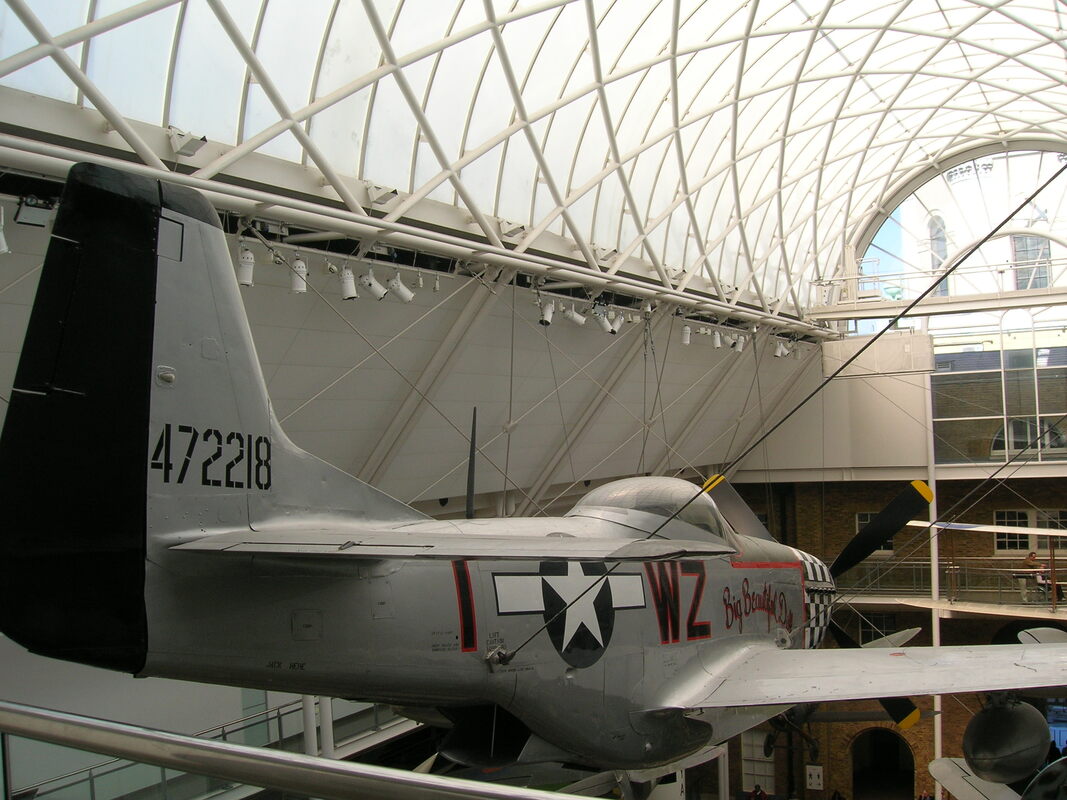 This photo was taken at the Imperial War Museum in London
There are plenty of War Museums in the UK and most are centred on one arm of the military - the army, airforce or navy. One of the museums covers strategy and that is Winston Churchill’s War Rooms which can be found in London near Whitehall. Portsmouth has two naval museums - the Royal Marines Museum and the Royal Naval Museum. The first museum is housed in former offices of the Royal Marines Artillery. Here one can learn about the difference the Marines made in the outcome of battles such as D-Day in the Second world War and in the Falklands war. A highlight in this museum is the display of over 8000 medals, many of which are rare. The second museum covers the history of the navy form King Alfred’s battle in 882 AD. Exhibitions show how Britannia ruled the waves in the 19th century. Demonstrated also is the role the present day navy plays in defending the shores against piracy and trafficking. There is also a gallery dedicated to Lord Nelson. At the RAF Museum At Cosford, Shropshire, one learns about the history of the RAF and that it is the oldest independent air force in the world. It was founded by Lord Trenchard in 1918. In this museum one finds rare and important military aircraft along with a unique collection of war planes from the UK and rare examples from allies and enemies. There is also a missile collection as well as flight simulators including a dog fight between a Spitfire and a M-109. At the Imperial War Museum in London there is a focus on aviation and suspended from the ceiling are planes from the Second World War from the British, the allies and the German sides. There is also the Imperial War Museum North in Manchester whose architectural design is based on the globe shattered by conflict. It uses sound, film and photography to explore how conflict has affected all of our lives. The highlight is ‘The Big Picture’ which is a 360 degree light and sound show. An interesting blend of navy and airforce is found at The Fleet Air Arm Museum in Somerset. Here one learns about naval aviation from the first manned kites, to helium filled airships, the carrier borne aircraft of WW2 to modern helicopters and Sea Harriers. Exhibitions include a theatre experience that takes one into action and displays of aircraft including the first British built Concorde. Now to the Army. The National Army Museum in London covers the soldier from the battle of 1066 through all wars to Fighting for Peace. There are interactive exhibits such as trying on an English Civil War helmet, to feeling how heavy a canon ball is or trying on chain mail armour. There are videos and archive footage to bring the experience of being a soldier to life. In Wales, the Royal Welch Fusiliers Museum at Caernarfon is dedicated solely to that regiment. It features their history stretching from the campaign of William the 3rd through the wars with France including the Napoleonic times, up through the World wars and peace keeping in modern times. There is an interesting twist of learning what life was like for the families of the men in the regiment. The Tank Museum in Dorset honours the fact that the first tank was invented by the British during the First World War and that it changed warfare forever. The museum has the largest collection of armoured vehicles in the world. One hundred years of history is explored in this museum from what led to the invention of the tank to the importance of the tank in breaking the stalemate in the First World War and being able to move ahead and win that war. At the National war Museum in Edinburgh there is a combination of themes from an exhibit of the Royal Scots Dragoon Guards, to the prisons of war, the Highland warrior as an icon of Scottish identity and a general honouring of Scottish soldiers killed in the defence of Scotland and later of the British Empire. Last but not least is Winston Churchill’s War Rooms in Central London. For World War 2 history enthusiasts this museum is a must. One can see where the staff slept, where Winston’s bedroom was, the phone that he called Roosevelt from, the map room where the strategies were discussed, and the general work place of all those involved in winning the war from this room. Many of these museums need more than one visit but are all so worthwhile. Here are many ideas for a rainy day! 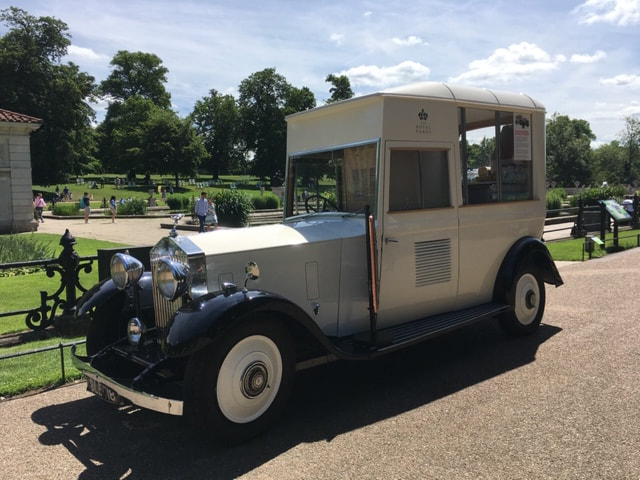 There are 8 Royal Parks and all together they make up over 5000 acres of parkland. Kensington Gardens flows into Hyde Park and then close by is Green Park and St James Park. A bit north of these is Regent’s Park. To the East is Greenwich Park. In West London are Richmond and Bushy Parks.
There are these lovely expansive green spaces in London because they are part of the hereditary possessions of the Crown. There is a palace in Kensington Palace now which continues to be lived in by members of the Royal Family. Green Park leads to Buckingham Palace and St James Park incorporates the Mall and the Horse Guards Parade all close to Buckingham Palace. There was once a palace in Richmond where Queen Elizabeth the 1st resided and there was also once a palace in Greenwich. Bushy Park is next to Hampton Court Palace. These lands were all used by the Kings and Queens of yesteryear mostly for hunting. Today the general public makes good use of these parks. On a sunny day you will see people laying on the grass enjoying the sun. People generally enjoy the beautifully tended gardens. Picnics take place. Many jog or cycle on the many paths. Children play in the playgrounds. In some parks there is boating available and horse riding as well. Regent Park has an outdoor theatre. Hyde Park has been historically known for Speaker’s Corner where one can go and give a point of view on any matter. In Winter, Hyde Park has a skating rink and Christmas market. And all of these parks have a cafe. As well, the Royal Parks host many events. There is the Royal Park half marathon, the ’Swim Serpentine,’ the 'Prudential Ride' (cycling) and the Duathlon in the Parks calendar for 2019. Hyde Park has hosted many very large music concerts and is the site of Proms in the Park at the end of the BBC Prom Season every September. Wildlife is coveted in the Royal Parks. There are deer herds in both Richmond and Bushy Parks which seems amazing right in the middle of a large city such as London. Richmond Park is the largest site of Special Scientific Interest and us a National Nature Reserve. There have been pelicans in St. James Park for over 400 years. There is a breeding program for hedgehogs in Regent’s Park. Many of the parks feature monuments to important and beloved persons. In Hyde Park there is the Diana Fountain, constructed following the death of Princess Diana. You will also find a small statue of Peter Pan there. At the edge of Hyde Park across the street from the Royal Albert Hall stands the very large monument built to honour Prince Albert, the husband of Queen Victoria, following his death. There is a Royal Parks charity which has been in existence since 2017. it hires volunteers, hosts school programs, has a horticultural apprenticeship scheme and generally maintains and conserves these parks. The charity has also taken on looking after other areas in London of historic interest. These include The Brompton Cemetery, the Victoria Tower Gardens, Canning Green and Poet’s Corner. Brompton Cemetery is a resting place for 200,00 people and you will find gravestones there since 1840. In Victoria Tower Gardens is a memorial to Emmeline Pankhurst, leader of the suffragettes. Spring is coming so make a point of enjoying these parks to the full this year! 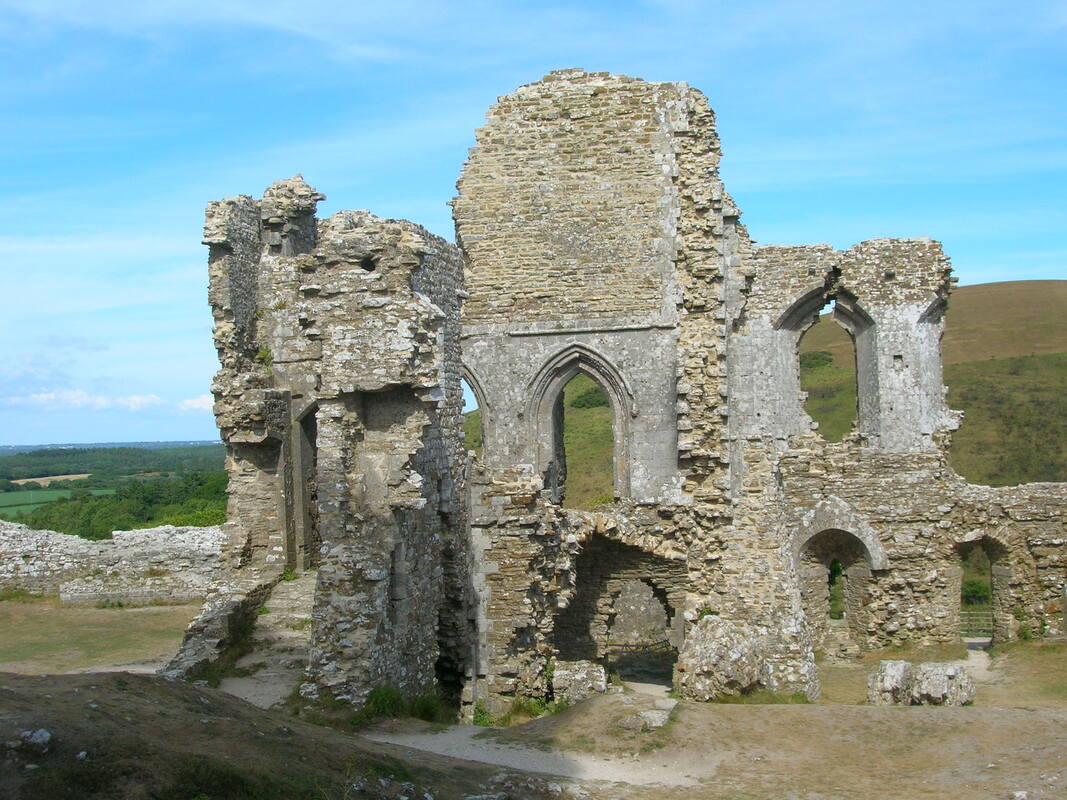 Photo of Corfe Castle in Dorset taken in August 2010.
The United Kingdom is filled with castles. The Castellarium Anglicanum, which is a list of castles in England and Wales, lists 1500 sites in England. Out of these there are 800 with visible remains and 300 substantial surviving structures. Wales is said to be the castle capital of the world due to having about 600 castles in a relatively small space. There have been more than 2000 castles in Scotland although some are now only known due to records as there is no sign of many of them now. Northern Ireland still has over 60 castles to visit. The definition of a castle is a fortified structure from the Middle Ages. Some were built on earlier Roman forts. In England there are a few from before the Norman invasion in 1066. What is left ranges from ruins to castles that are totally in tact such as Windsor Castle and Norwich Castle. Some have just the keep (a fortified tower) such as Totnes Castle in Norfolk and others have a keep and bailey (the tower and courtyard) such as Lewes Castle in East Sussex. Today many of the castles have been taken over by organizations such as English Heritage and National Trust. Others such as Colchester Castle, are run by the Local Authority. Peckforton Castle is a hotel. Dunham Castle forms part of a university. Leeds Castle has been restored, is occupied and is open to visitors. And of course Windsor Castle is a royal residence. Castles were always built as defences against attack. Edinburgh Castle in Scotland is said to have the history of the most attacks of any castle. Moats were a common feature to further chances of keeping the enemy away. Castles fell out of favour after gunpowder and canons came into being. There are a lot of castles in the North of England such as in Northumberland. But there are castles in nearly every county of the country. Some of the well known ones are Tintagel in Cornwall, Dover Castle in Kent, Carlisle Castle in Cumbria, Rye Castle inn East Sussex, Sudeley Castle in Gloucestershire , Winchester Castle in Hampshire, Okephampton Castle in Devon, Farnham Castle in Surrey, Skipton Castle in Yorkshire and Corfe Castle in Dorset. In Scotland Stirling Castle is also well known. In Wales, Caernarfon and Conwy are popular visiting spots. Belfast Castle is one of the most well known castles in Northern Ireland. Castles form an important part of the history of the United Kingdom. It is fortunate that so many have been preserved for future generations to visit. 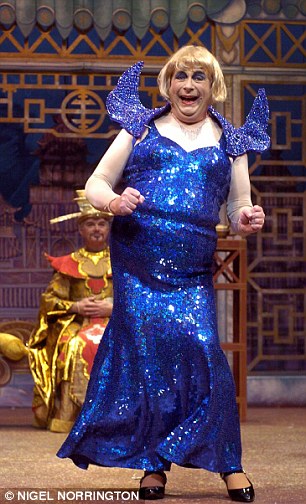 The pantomime has its origin in the Roman Saturnalia midwinter feast when men played women and women played men. Panto comes from the Greek and means an actor who takes on all the roles. This is how it first started. The pantomime first came to Britain in the 18th century from the later tradition of the Italian commedia dell’arte or improvised theatre. The stories included clowns, jesters and a villain. The stories changed from fairy tales and stories of the Arabian knights to familiar stories used in pantomimes today. The old plays were often called ‘mummers plays’ where there was a moral to the story. In the 19th and 20th century the pantomime changed with the introduction of the music hall entertainers. Today well known actors and musicians or even television personalities often take part in the popular pantomimes in the UK. For example, Strictly Come Dancing judge Shirley Ballas is taking part in Jack in the Beanstalk at Liverpool Empire this season and X factor winner Joe McElderry as well as Eastenders star Steve McFadden (who plays Phil Mitchell) are performing in Dick Whittington at the Mayflower Southampton.
Pantomimes have two main ingredients. Firstly men dress up as women and vice versa and secondly the audience participates in the play. A statement such as ‘he’s behind you’ is typical of what is heard in theatres across the country. Pantomimes are musicals and they are comedic. They used to be for adults but now are typically family fun. Pantomimes used to commence after Christmas on Boxing Day but now they often start earlier in December or even earlier. Some of the most popular pantomimes across the UK this year are Aladdin, Cinderella, Dick Whittington, Snow White, and Sleeping Beauty. They are held in nearly every county in England, Scotland, Wales and Northern Ireland as well as on the island of Jersey and the Isle of Wight. Ones of note are Aladdin in Swindon, Peter Pan in Northampton, Peter Pan in Nottingham, Aladdin in Glasgow and Cinderella in Manchester. Many cities such as Bristol have up to four venues for the pantomime this year. In London there are more than 15 locations from the Hyde Park ice rink (Peter Pan on Ice) to the West End, Wimbledon, Islington and Catford. Plays of note are Robinson Crusoe at the Greenwich Theatre, Aladdin at Hackney Empire,A Christmas Carol at the Old Vic, Sleeping Beauty at the Theatre Royal in Stratford, Stick Man at Leicester Square Theatre and Dick Whittington at Lyric Hammersmith. Check on line for a pantomime near you to further enjoy the Christmas season the UK way! |
Categories |
 RSS Feed
Proudly powered by Weebly